Education Counselling

Build the Skills to Support Students Through Their Educational Journey

Every learner faces unique academic, personal, and career-related challenges at different stages of life. The Education Counselling course is designed to help you understand these challenges and guide students towards informed educational and personal decisions. Whether a student is struggling with academic pressure, choosing the right career path, adapting to a new learning environment, or managing emotional concerns, an education counsellor plays a vital role in providing the right support.

This programme combines psychological principles with practical counselling techniques to help learners develop confidence in supporting students of different age groups. Through structured learning, practical sessions, and real-life case discussions, participants gain the knowledge required to understand student behaviour, improve communication, and provide ethical counselling support.

The course is suitable for individuals who wish to build a career in educational guidance, counselling, student support services, or related psychological fields.

Course Overview

This programme provides both theoretical knowledge and practical learning experiences to help participants develop professional competency in Education Counselling. The curriculum focuses on understanding student psychology, counselling methods, communication skills, ethical practices, and practical applications that prepare learners for real-world counselling situations.

Course Duration:

Diploma

3 Months

Advanced Diploma

6 Months
This programme builds a strong foundation in psychology, counselling, and educational guidance while developing practical communication, assessment, case analysis, and counselling skills for professional growth.

Why Choose This Course?

Educational environments continue to evolve, and students today experience increasing academic expectations, emotional challenges, and career-related uncertainty. This course prepares learners to understand these concerns with empathy while applying structured counselling methods that encourage positive growth. During the programme, participants learn how to:
Understand student behaviour and learning patterns.
Improve communication and active listening skills.
Support students during academic and career decision-making.
Identify emotional and behavioural concerns at an early stage.
Apply ethical counselling practices in educational settings..
The programme balances academic learning with practical exposure, enabling participants to develop both knowledge and real-world counselling skills.

What You Will Learn

This programme equips learners with the knowledge and practical skills needed to support students throughout their educational journey. Key learning outcomes include:

By the end of the course, participants will be prepared to provide meaningful educational guidance that promotes students’ academic success, personal growth, and overall well-being.
Understanding educational psychology and student development.
Identifying academic, behavioural, and emotional challenges affecting learning.
Applying effective counselling and guidance techniques in educational settings.
Supporting career planning, goal setting, and decision-making.
Learning communication and active listening skills for student interactions.

Practical Learning Approach

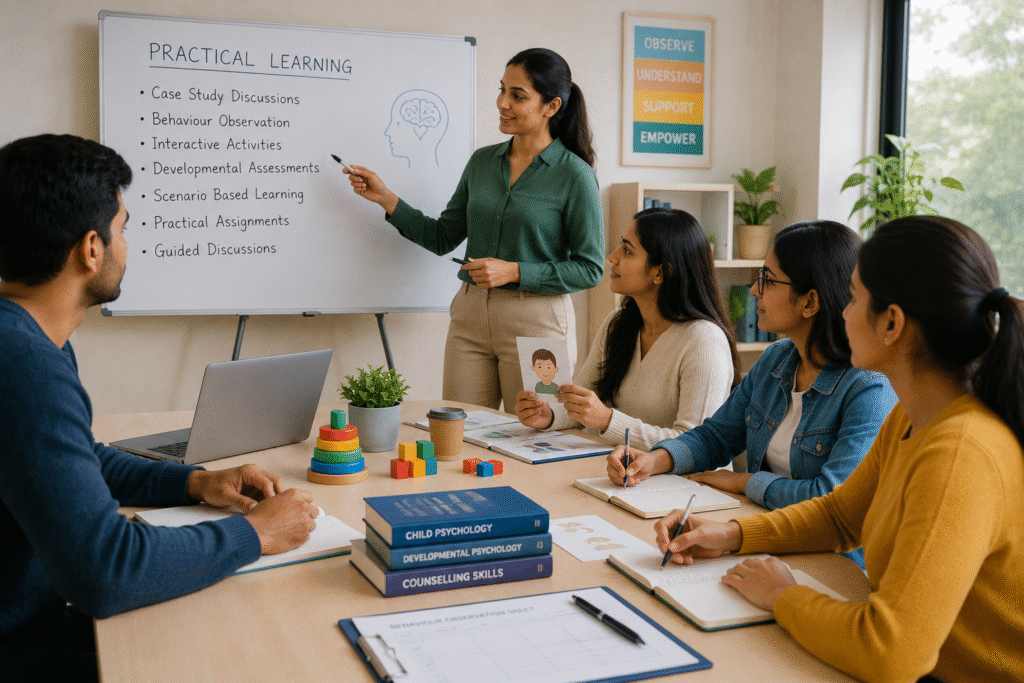
Understanding educational guidance becomes easier through practical learning experiences. This course encourages learners to apply counselling techniques in academic and career guidance situations through interactive and skill-based activities. The learning experience may include:
Educational counselling case studies
Career guidance simulation exercises
Student assessment activities
Academic planning discussions
Scenario-based counselling practice
Practical assignments and presentations
Guided learning sessions with experienced trainers
This balanced learning approach helps learners strengthen their communication, counselling, and decision-making skills while preparing them to guide students through educational and career pathways.

Who Should Join This Course?

This course is ideal for individuals who are passionate about supporting students and helping them achieve their educational goals. It is suitable for:
Students interested in psychology and counselling.
Graduates planning a career in education or mental health
School teachers and educators.
Academic coordinators and student mentors.
Career guidance professionals.
Working professionals looking to expand their counselling skills.
Individuals interested in personal and professional development.
No previous counselling experience is necessary, making the programme accessible for beginners as well as professionals seeking to strengthen their existing knowledge.

Course Curriculum

Gain practical knowledge to support students in making informed educational choices while addressing learning and career-related concerns.

Educational Psychology

Understand student learning and behaviour.

Student Guidance Methods

Guide students through academic success.

Learning Styles & Motivation

Improve learning through motivation techniques.

Career Planning Basics

Build strong career planning skills.

Academic Counselling Skills

Support students with academic counselling.

Practical Assignments & Case Analysis

Apply knowledge through practical cases.

Who Should Enroll?

This course is ideal for individuals who want to guide students in academic decisions, career planning, learning challenges, and personal development. It helps learners develop counselling skills to support students throughout their educational journey. Suitable For:
Teachers and educators
Career guidance professionals
Psychology students
Academic counsellors
Professionals working in educational institutions

Human Behaviour

Understand how psychological factors influence learning behaviour, academic performance, and student development. Explore the connection between motivation, emotions, environment, and educational experiences to support effective learning outcomes. Key Learning Points:
01 Learning behaviour and motivation factors
02 Psychological barriers in education
03 Student needs and behavioural patterns
04 Creating supportive learning environments

Career Opportunities

Education Counselling helps learners develop skills to guide students in academic decisions, career planning, and personal development. This course creates opportunities to work in educational settings and support learners in achieving their goals.

Career Paths:

Education Counsellor
Career Guidance Professional
Academic Advisor
Student Support Specialist
Learning Consultant

Learning Methodology

The Education Counselling course focuses on practical approaches to guide students in academic, career, and personal development.
STEP 1

Learning Psychology:

Understand student motivation, learning styles, and educational challenges.
STEP 2

Guidance Techniques:

Develop skills for academic and career counselling.
STEP 3

Interactive Sessions:

Gain knowledge through discussions, activities, and case studies.
STEP 4

Practical Application:

Learn to support students in making informed educational decisions.

Why Intel Thrive?

Build the knowledge and confidence to guide students in making informed academic and career decisions. Intel Thrive offers practical learning, counselling techniques, and student-focused strategies that prepare you to address educational challenges with professionalism and empathy.

Frequently Asked Questions (FAQs)

Students, graduates, teachers, working professionals, and anyone interested in psychology can enroll. The course welcomes learners from different educational and professional backgrounds who are passionate about understanding students and supporting their academic and personal growth.

No. The course is designed for both beginners and experienced learners. Every concept is explained in a structured and easy-to-understand manner, allowing participants to build their knowledge step by step.

Yes. Practical sessions include case studies, role-plays, assignments, and guided practice. These activities help participants apply theoretical concepts to real-life counselling situations while developing confidence and professional communication skills.

Graduates can explore opportunities in counselling, education, healthcare, NGOs, corporate wellness, and related fields. The programme also provides a strong academic foundation for those who wish to pursue higher studies in psychology or counselling.

Yes. A Diploma, Advanced Diploma, or Master Diploma certificate is awarded based on the programme completed, recognising your successful participation and learning achievements while supporting your professional development.

Offline Education Counselling Training Courses

Join offline Education Counselling training courses to develop practical student guidance and counselling skills. Enrol today and build a rewarding career.

Enquiry Form