Learning Disability

Learning Disability Training for Future Professionals

Every individual learns differently. Some children and adults require additional support to develop academic, communication, or everyday life skills because of specific learning challenges. Understanding these differences is the first step toward creating positive learning experiences and helping individuals reach their full potential.

Our Learning Disability course is designed to provide a strong foundation in understanding learning differences, behavioural patterns, assessment methods, and practical intervention strategies. The program combines psychological concepts with hands-on learning, enabling students to develop the confidence and skills required to support individuals with diverse learning needs in educational, clinical, and community settings.

Whether you are beginning your journey in psychology or looking to expand your professional skills, this course offers practical knowledge that can be applied in real-life situations.

Course Overview

This programme provides both theoretical understanding and practical exposure to help learners build competency in the field of Learning Disability. The curriculum is carefully structured to develop professional knowledge while encouraging empathy, observation, communication, and ethical practice.

Throughout the course, participants gain insight into how learning disabilities affect academic performance, emotional well-being, social interaction, and daily functioning. The programme also introduces practical approaches that help learners identify challenges, understand individual strengths, and provide appropriate support.

By the end of the course, students will have the confidence to work with individuals who require additional educational or psychological support while understanding the importance of personalised care and evidence-based practices.

Course Duration

Diploma

3 Months

Advanced Diploma

Duration Months
Both programmes are designed to balance theoretical learning with practical experience, allowing students to build knowledge step by step.

Why Choose This Course?

A well-designed Learning Disability programme should go beyond textbooks. This course focuses on developing practical abilities that prepare students for real-world situations. During the programme, you will learn how to:
Understand different types of learning disabilities and their characteristics.
Recognise early signs that may require professional attention.
Develop effective communication and observation skills.
Learn structured approaches for assessment and intervention.
Support children, adolescents, and adults with diverse learning needs.
Build confidence through practical sessions and case-based learning.
Understand ethical responsibilities while working with individuals and families.
The course is suitable for learners who wish to make a meaningful contribution in educational, healthcare, counselling, or community environments.

What You Will Learn

This course equips you with practical knowledge to understand and support individuals with learning disabilities in educational and developmental settings.

Key learning outcomes include:
Understanding different types of learning disabilities and their characteristics.
Identifying early signs that affect academic performance and daily learning.
Learning assessment methods and intervention strategies.
Developing effective communication and learner support techniques.
Creating inclusive learning environments for diverse needs.
Applying ethical practices through case studies and practical activities.

Practical Learning Approach

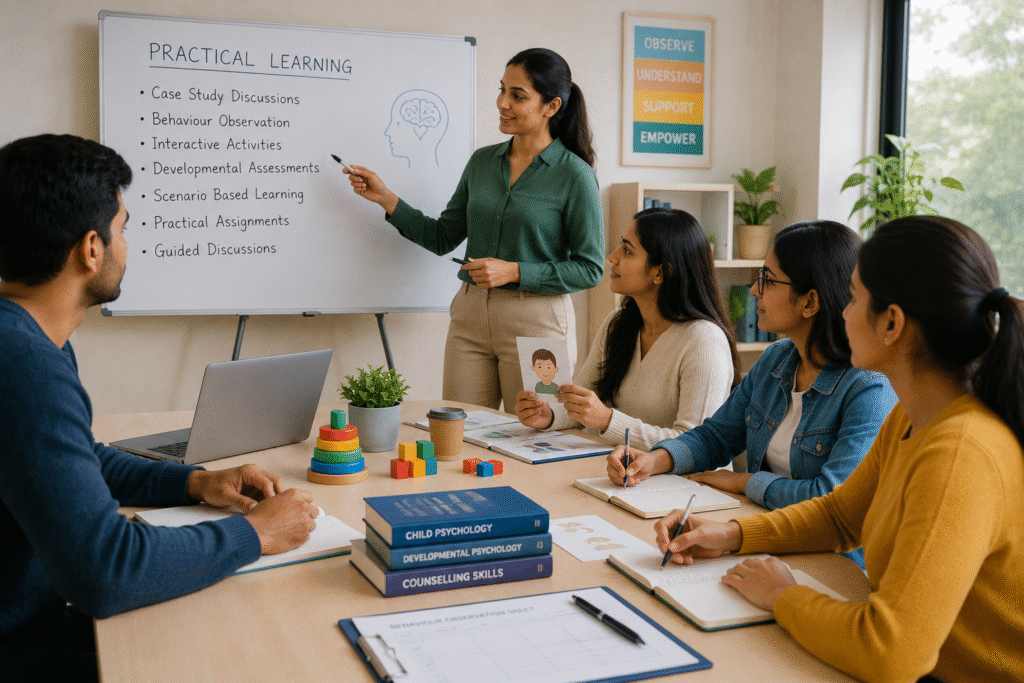
Learning becomes more effective when psychological concepts are applied through practical experiences. This course provides learners with hands-on activities that help them understand different learning disabilities, identify learning challenges, and explore supportive intervention strategies in educational settings.
Learning disability case study discussions
Classroom observation exercises
Screening and assessment activities
Individual learning support planning
Scenario-based intervention exercises
Practical assignments and reflective activities
Guided discussions with experienced psychology trainers
This practical learning approach helps learners develop the confidence to identify learning difficulties, recommend appropriate support strategies, and contribute to creating inclusive learning environments that promote every learner’s academic and personal development.

Who Can Benefit from This Course?

This course is ideal for individuals who want to expand their knowledge in psychology and learning support, including:
Students pursuing psychology or education
Teachers and special educators
Parents interested in understanding learning challenges
Counsellors and aspiring mental health professionals
Healthcare professionals
NGO and community workers
Individuals planning a career in psychology or counselling
No matter your background, the course is designed to make learning accessible through simple explanations, guided practice, and practical examples.

Course Curriculum

Understand different learning disabilities and explore practical strategies that improve learning experiences and educational outcomes.

Learning Basics

Understand the fundamentals of learning disabilities.

Assessment Skills

Learn to identify and assess learning challenges.

Inclusive Learning

Explore effective inclusive education practices.

Learning Strategies

Develop personalized learning support techniques.

Support Systems

Strengthen family and school collaboration.

Case Studies

Gain practical experience through real-life cases.

Who Should Enroll?

This course is designed for educators, counsellors, psychologists, and professionals who want to understand learning difficulties and support individuals with special educational needs. It provides knowledge about assessment methods, intervention strategies, and learning support techniques.
Teachers and special educators
Psychology students and graduates
Counsellors and therapists
Parents and caregivers
Professionals working with children and learning needs

Human Behaviour

Explore how learning difficulties affect thoughts, emotions, behaviour, and academic performance. Learn to understand individual differences and behavioural patterns to provide better support and create inclusive learning experiences.
01 Behavioural impact of learning challenges
02 Understanding individual learning patterns
03 Emotional and social effects of disabilities
04 Support strategies for behavioural development

Career Opportunities

A Learning Disability course equips learners with knowledge to identify and support individuals with learning challenges. Professionals can contribute to inclusive education, student support services, and intervention programs that help learners reach their potential.

Career Paths:

Learning Support Professional
Special Education Assistant
Educational Counsellor
Child Development Associate
Inclusive Education Specialist

Learning Methodology

This course follows a practical learning approach to help students understand learning difficulties and develop effective support strategies.
STEP 1

Conceptual Learning

Understand types, causes, and characteristics of learning disabilities.
STEP 2

Assessment Methods

Learn identification and evaluation approaches.
STEP 3

Practical Activities

Work with case studies and intervention techniques.
STEP 4

Support Skills

Develop strategies to assist children, educators, and families.

Why Intel Thrive?

Understand learning disabilities through evidence-based concepts and practical approaches. Our program equips you to identify learning challenges, support individual learning needs, and create inclusive educational strategies that help children and learners reach their full potential.

Frequently Asked Questions (FAQs)

Students, graduates, teachers, working professionals, and anyone interested in psychology are welcome to join. The course is designed to support learners from different educational and professional backgrounds who want to build practical knowledge and skills.

No. The course is designed for both beginners and experienced learners. Concepts are explained in a simple, structured manner, making it easy to understand while gradually building professional knowledge.

Yes. Practical sessions include case studies, role plays, assignments, and guided practice. These activities help participants apply theoretical concepts in realistic situations and develop greater confidence in supporting individuals effectively.

Graduates can explore opportunities in counselling, education, healthcare, NGOs, corporate wellness, and related fields. The course also provides a valuable foundation for advanced studies and professional development within psychology and mental health.

Yes. A Diploma, Advanced Diploma, or Master Diploma certificate is awarded based on the program completed. The certification recognises your successful completion of the course and the knowledge and practical skills gained throughout the programme.

Start Your Learning Disability Training Today

Build the knowledge and practical skills to identify learning challenges, support diverse learners, and create inclusive educational environments with expert-led training.

Enquiry Form