Family Counselling

Build Stronger Relationships Through Professional Family Counselling Training

Families are the foundation of emotional well-being, yet every family experiences challenges at different stages of life. Miscommunication, parenting concerns, relationship conflicts, emotional stress, financial pressures, and life transitions can affect the harmony within a family.  Family Counselling helps individuals and families improve communication, resolve conflicts, and build healthier relationships using practical, evidence-based counselling techniques.

This course is designed for individuals who want to develop professional counselling skills while gaining a deeper understanding of family dynamics, emotional well-being, and conflict resolution. Whether you aspire to become a counsellor, support families in educational or healthcare settings, or simply wish to strengthen your interpersonal skills, this program offers practical knowledge that can be applied in real-life situations.

Course Overview

The Family Counselling program combines psychological theories with practical counselling techniques to help learners develop confidence in working with individuals, couples, parents, and families. The curriculum is carefully structured to build both theoretical understanding and practical competency, allowing students to approach family-related concerns with empathy, professionalism, and ethical responsibility.

Throughout the course, learners explore how family relationships influence emotional development, behaviour, communication, and mental well-being. They also gain practical exposure through case discussions, role plays, guided practice, and supervised learning activities that prepare them for real counselling environments.

Course Duration

Diploma

3 Months

Advanced Diploma

6 Months

Master Diploma

1 Year
Each level gradually expands your knowledge and practical skills, enabling continuous professional growth.

Why Choose This Course?

Families today face a wide range of emotional and social challenges. As awareness about mental health continues to grow, trained counselling professionals are becoming increasingly valuable in educational institutions, healthcare organisations, community services, and private practice.
Understand family relationships from a psychological perspective.
Learn effective communication and active listening techniques.
Develop practical counselling and problem-solving skills.
Understand child, adolescent, adult, and elderly family concerns.
Build confidence in handling emotional and behavioural challenges.
Practice ethical and professional counselling standards.
Gain real-world experience through practical learning activities.
Rather than focusing only on theory, this program encourages learners to think critically, communicate compassionately, and apply counselling techniques in practical situations.

What You Will Learn

During the Family Counselling course, you will develop knowledge and skills that can be used in various counselling and support environments.

Some of the important learning outcomes include:


By the end of the program, learners will have a balanced understanding of both psychological concepts and practical counselling approaches.
Understanding family structures and relationship patterns.
Recognising emotional and behavioural challenges within families.
Improving conflict resolution and communication strategies.
Learning counselling techniques suitable for different age groups.
Building empathy and active listening skills.
Understanding mental health and emotional well-being.
Applying ethical principles in counselling practice.
Developing confidence through practical case discussions.

Practical Learning Experience

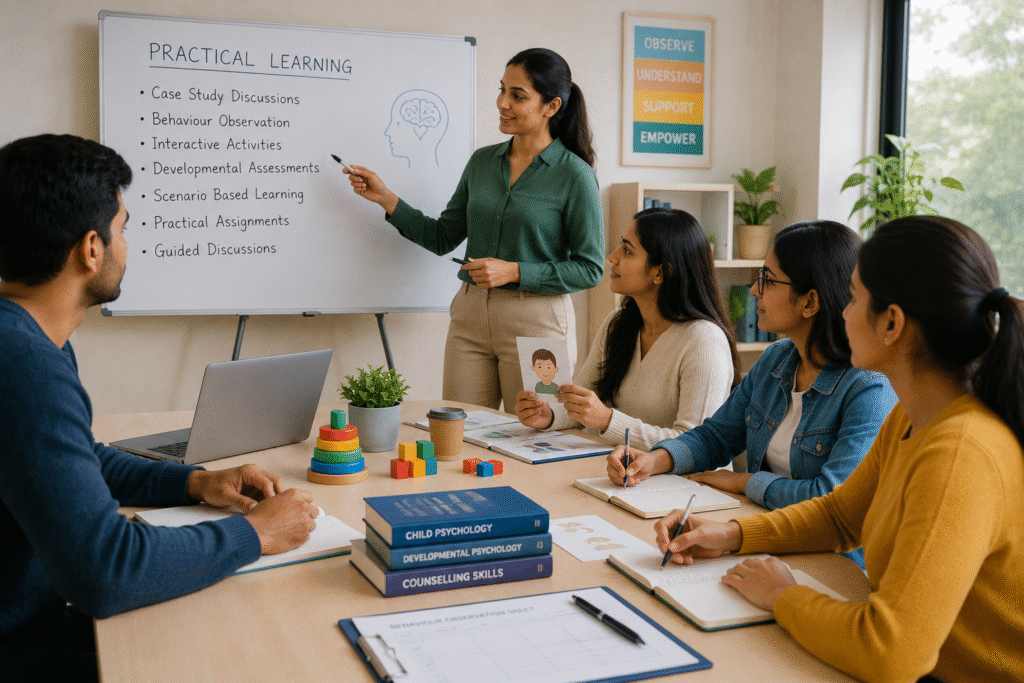
Learning counselling requires more than reading textbooks. This program includes practical activities that help learners develop confidence and professional skills.
Interactive classroom discussions.
Guided counselling demonstrations.
Realistic case study analysis.
Role-play exercises.
Communication skill development.
Practical assignments.
Mentor guidance and feedback.
These activities allow learners to experience how counselling principles are applied in real-life situations while improving their observation, communication, and interpersonal skills.

Who Should Join This Course?

This course welcomes learners from different educational and professional backgrounds. It is suitable for:
Students interested in psychology and counselling.
Graduates looking to build a career in mental health.
Teachers and educators supporting students and parents.
Social workers and NGO professionals.
Healthcare professionals seeking counselling knowledge.
HR professionals working with employee well-being.
Parents and caregivers who wish to improve family communication.
Anyone passionate about helping individuals and families overcome challenges.
No matter your background, the course provides step-by-step learning that is easy to understand and practically relevant.

Course Curriculum

Learn counselling approaches that strengthen family relationships, improve communication, and resolve conflicts through practical interventions.

Family Dynamics

Understand family roles and relationships.

Communication Skills

Build effective and empathetic communication skills.

Conflict Resolution

Learn practical conflict management techniques.

Parenting Support

Guide families with positive parenting strategies.

Family Therapy

Explore the basics of family counselling.

Practical Sessions

Gain hands-on experience through case studies.

Who Should Enroll?

This course is suitable for individuals interested in understanding family relationships, communication patterns, emotional challenges, and conflict resolution. It helps learners develop counselling skills to support healthier family interactions.
Aspiring family counsellors
Psychology students and graduates
Social workers
Healthcare professionals
Individuals interested in relationship and family support

Human Behaviour

Understand how family relationships, communication styles, and emotional connections influence human behaviour. Learn how individual actions and family dynamics interact to shape thoughts, feelings, and relationship patterns.
01 Family dynamics and behavioural patterns
02 Communication and emotional responses
03 Relationship influences on behaviour
04 Understanding conflicts and interactions

Career Opportunities

Family Counselling training helps learners understand family dynamics, communication challenges, and relationship concerns. Professionals can support families through guidance, emotional assistance, and counselling approaches in community, wellness, and private practice settings.

Career Paths:

Family Counsellor
Relationship Support Professional
Wellness Consultant
Community Counsellor
Mental Health Associate

Learning Methodology

The Family Counselling course combines psychological concepts with practical counselling approaches to manage family relationships and challenges.
STEP 1

Relationship Understanding

Learn family dynamics, communication patterns, and emotional factors.
STEP 2

Counselling Practice

Develop skills through role plays and case discussions.
STEP 3

Conflict Management

Learn techniques for resolving relationship concerns.
STEP 4

Practical Application

Apply counselling methods to support healthy family relationships.

Why Intel Thrive?

Develop the skills to understand family relationships, communication patterns, and conflict resolution techniques. Through practical learning and case-based discussions, you’ll gain the confidence to support families in building healthier relationships and emotional well-being.

Frequently Asked Questions (FAQs)

Students, graduates, teachers, working professionals, and anyone interested in psychology are welcome to join. The course is designed to create a supportive learning environment where learners from diverse backgrounds can confidently develop counselling knowledge and practical skills.

No. The course is designed for both beginners and experienced learners. Concepts are introduced in a clear, structured manner, making it easy to build understanding step by step while gradually developing practical confidence.

Yes. Practical sessions include case studies, role plays, assignments, and guided practice. These activities help learners strengthen communication, counselling techniques, and problem-solving skills while preparing them for real-world counselling situations.

Graduates can explore opportunities in counselling, education, healthcare, NGOs, corporate wellness, and related fields. The knowledge and practical skills gained through the course can also serve as a strong foundation for further studies and professional growth.

Yes. A Diploma, Advanced Diploma, or Master Diploma certificate is awarded based on the program completed. The certification recognises your successful completion of the chosen level and reflects your commitment to professional learning in counselling.

Build Stronger Families Through Counselling

Gain practical counselling skills to improve family relationships, resolve conflicts, and support emotional well-being with expert-led Family Counselling training.

Enquiry Form